cat-right

Gluten Free Ancho-Pecan Fudge Brownies...

Ancho Chile-Pecan Brownies
(Discliamer: I have always wanted to maintain this site as an ad free website.  It is something I do out of love so I have no issues with the cost of maintenance.  My endorsement of any products is based solely on my own opinion.  Furthermore, I have never been compensated for using this or any product on my site, I plan to keep it that way.)

Some of the things I’ve heard spoken in my dining room, by seemingly normal people, have run the gamut from funny to downright offensive.  A few examples, I’m not making these up, ask any chef friends you have and they will have heard the same, if not similar, one liners.

“Can I get that burger without the bun and some extra fries instead?  I’m on Atkins”

“I’ll just have a coke.  You think the chef would mind heating up this Big Mac for me?”

“What kind of water do you use to make ice?”

“Can I get that bottle of wine half off?  I know how much it costs at the liquor store.”

“I’m allergic to shellfish so I’ll just have the scallops.”

And for the first time in the late 90′s I heard “Is there gluten in that?”

I had no idea why she cared, I really at that point had no idea period.  I asked for the server for more information.  “She says she is allergic to flour.”  was the response.  I’d heard of some odd allergies, shallots, garlic, onions, fish, shellfish, soy, nuts, but this was the first time I’d ever heard flour.  I prepared her dish sans flour and went about my life.  It wasn’t long before I had the same request.  Gluten allergy, no flour and no processed foods.  I did a little homework and found out that these individuals had Celiac disease.

Celiac disease was not life threatening as far as I could tell, but was capable of causing severe discomfort in those affected were they to consume products containing gluten.  Over time it became a more common request.  Today, menus have GF (Gluten-Free) sections, there are GF cookbooks and GF blogs, one of the better ones being elanaspantry.com.  It has become a business within a business with an ever growing following, mainly because testing for gluten sensitivity has become increasingly easier.  Even so, only 1 in 10 afflicted with Celiac disease is aware of it.

For chefs, GF cooking is relatively simple.  Avoid flours and processed foods to compose your dishes.  This is a much more difficult proposition for pastry chefs and bakers who live and die by the scale.  As a chef, all I had to offer Celiacs was fresh fruit for desserts.  I wanted to find something else.  I purchased specialty flours and began working on something suitable for Celiacs to be able to have for dessert.  I spent a week failing miserably.  I bought pre-made mixes that, while attractive, tasted like beach sand.  I gave up, I wasn’t a pastry chef so I was comfortable that I could do my part for Celiacs.  I’ve done that for the last 8 years, went out of my way for the occasionally afflicted guests, it’s the least I could do while munching on Ciabbatta, pasta and chocolate chip cookie dough.

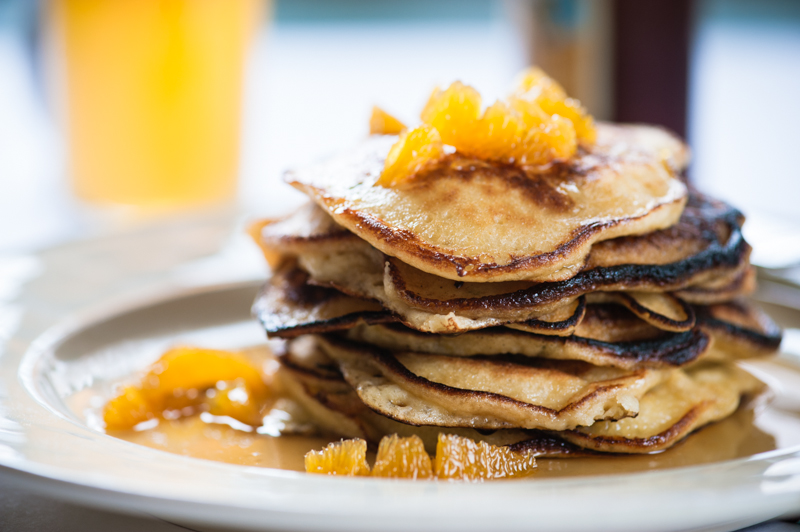
Earlier this year I met a man, Jared, who was making and selling his own GF dry mixes.  I remember those mixes from the late 90′s and how horrid they were.  I was skeptical but he seemed like a genuine enough guy so I had to try for myself.  All I can say is, GF has come a long way.  I made golden raspberry pancakes and these ancho-pecan brownies.

To be honest, the taste wasn’t the same, but it wasn’t that far off either.  The original mixes I had tried were bitter, dry and had an odor of leather.  Jared’s brownies were moist, chocolatey and far better than I would have imagined.  If I had eaten them without knowing what they were, I may not have even noticed they were gluten free.  I added 3 tsp. of ancho chile powder and a 1/2 cup of pecans to the recipe but followed the instructions otherwise.

Lillabee Brownies
The name of Jared’s company is Lillabee.  You can find some info on his site for obtaining his mixes if you’re a local of Colorado, if not, maybe he’ll mail it to you.

Chunky Guacamole and Trying to Get Home...

a beautiful avocado

Having been involved in food professionally for the last 25 years, it has always been an excuse to eat out as often as possible, to try new things in new places. But sometimes, and all of us feel this way, we want to go back to something familiar. Thus the massive resurgence of so-called ‘comfort’ foods. Gussied up versions of the type of food mom served or that you could get at the local diner, that trend has now morphed into streetfood, simple foods done well.

In 2001, just after the 9/11 tragedy, I found myself stuck in Germany with no chance of getting stateside any time soon. It was an odd feeling being American and working in a European Hotel where the news of 9/11 was a brief mention in passing conversation. I was angered at what was happening as I sat and watched CNN, with no sound in the staff dining room, I wanted, needed people to be angry with me.

The hotel was in St. Moritz, Switzerland, beautiful and perfect in every way, from the narrow cobblestone streets, to the shops and markets to the town square with a large copper plaque in the shape of the US, and a star in the center denoting Vail, CO as its sister city. Whenever I felt a little homesick, I would take a walk to the square, pick up a USA Today and head over to see the plaque. After 9/11, the plaque no longer gave me comfort. It was as if things were changing back home, which they were, without me and I felt even more disconnected.

Once my contract for the summer season was up, I decided to head home. But getting home was going to be no easy task, airports were closed and travel was grounded. A German girl, Stephanie, I worked with offered me a place to stay with her family until I could arrange a flight (I would end up marrying that girl, in case you were wondering). It took about a month to be able to secure a flight back, in the meantime, I was glued to CNN, I wanted to be home more and more every day. Stephanie mentioned that she had worked at a Mexican restaurant as a hostess and wanted to know if I was interested. Needing something familiar I was game, besides, all the restaurants we had been to featuring other ethnic cuisines had been fabulous, and Mexican food seemed the easiest of all, how wrong I was.

Guacamole

The only saving grace for that trip to ‘Chili’s’ was the Dos Equis, the food was barely edible, but Stephanie, having believed this was Mexican food, enjoyed it. When Stephanie came stateside in 2002, she tried and fell in love with guacamole. She would buy the bland pureed versions at the grocer and go to town. I forget how it happened, but one day I made guacamole at home. Fresh, chunky, spicy and bright, I think we were having friends over for drinks and apps. She still hasn’t forgiven me for allowing her to eat that premade crap at the grocer for so long.Here is that guacamole recipe…

Guacamole
3 Avocadoes
1 Tbs. garlic, minced
1 jalapeno, seeds removed and miced
½ cup onion, minced
½ cup cilantro, chiffonade
Juice of 2 limes, 3 if you like it more tart
½ tsp. cayenne pepper
1 tsp. kosher salt
Fresh ground black pepper

Guac Fixin's

Method:

1. Starting at the top, run your knife around the entire circumference of the avocado.
2. Twist the two halves in opposite directions to separate.
3. Remove the seed with a knife (if your confident) or a spoon (if your not).
4. Holding the avocado in your hand, gently run your knife through the flesh of the avocado 3-4 times vertically and then horizontally, gentle enough not to go through the skin, yours or the avocadoes.
5. Scoop the avocado into a bowl.
6. Add the remaining ingredients and mix well with a fork, allowing the avocado to to break up in the bowl.
7. You can serve immediately but the guacamole get better after a few hours.

You can substitute the cayenne for any type of chili powder you like, sometimes I’ll use chipotle powder instead.

Gazpacho with Spiced Shrimp, Lemon Crema...

A simple Gazpacho

This is a post I’ve been looking forward to writing for a while now. Not so much for the recipe, but for the chance to apply some, if not all, of what I learned at the Food and Light Workshop held here in Colorado to my images. It was organized by Jen at userealbutter.com and included three of food blogging’s heavy hitters, Todd and Diane of WhiteOnRiceCouple.com and Helene from MyTartelette.com.

The workshop was attended by both professionals and newbies and seemingly every skill level inbetween. It was held at the Rembrandt Yard in Boulder in a space that looked liked it had been designed solely for shooting food. There were giant windows casting fantastic light on 3 sides of the room.

Topics covered everything from getting your camera off the AUTO setting to direction of light and types of light. The 2 days was highlighted by styling demos from both Helen and Diane. Apart from learning more about shooting with off-camera strobes, this was the main reason I was here. While I feel my photos are technically strong, I don’t feel they convey any type of style or forethought and that’s what I want to change. The photos on both their sites, and like  Jen’s site, seem like they were created effortlessly.

Gazpacho-6 Gazpacho-7

Normally when I take out my camera to shoot for my site, I put no other thought into the photos other than “Do I have a correct exposure for the light available?” and”Do I have the proper portion of my subject in focus?” What I learned was to think about what type of light I had, which direction was the light coming from, what mood I wanted to convey with my photo and the layers I needed to present my dish. These were all the things that I put into the photos of this Gazpacho. They are not perfect, but they represent a step forward for me, and for that I thank Jen, Todd, Diane and Helene.

Gazpacho with Spiced Shrimp, Lemon Crema (8 servings)

2 English cucumbers, peeled and rough chopped
8 ripe tomatoes, rough chopped
1 red onion, rough chopped
1 red bell pepper, seeded and rough chopped
2 Tbs. garlic, minced
2 cups Tabasco bloody mary mix
2 oz Sherry Vinegar
4 oz extra virgin olive oil
1 Tbs. parsley, chopped
1 Tbs. oregano, chopped
Kosher salt
Fresh ground black pepper

1. Combine all ingredients in a blender and puree till smooth.
2. Season to taste with salt and black pepper.

Spiced Shrimp

1 lb. shrimp, peeled and deveined
2 Tbs. pickling spice
1 Tbs. cayenne pepper
1 Tbs. fresh ground black pepper

1. Bring 2 qts of water to a boil.
2. Add the pickling spice, cayenne pepper and black pepper.
3. Bring the water back to a boil.
4. Add the shrimp to the boiling water and turn off the heat completely
5. Allow the shrimp to remain in the water for 10 minutes.
6. Remove from water and chill.

Lemon Crema

2 oz. sour cream
Juice of half a lemon

1. Combine the sour cream and lemon juice.
2. Mix well and reserve for service.

One quick note about poaching shrimp…In the last fifteen years I have seen cook after cook boil shrimp until they were done, or overdone as was mostly the case. There is a fine art to cooking a shrimp so that when your teeth sink into it, you can hear and feel that ‘pop’ of a perfectly cooked prawn. As a rule of thumb, I use 1 gallon of cooking liquid per 2 lbs. of shrimp. Bring the liquid to a boil, add your shrimp and then turn the heat off… yes, off. Allow the shrimp to cook slowly in the liquid as it cools, check for doneness at about 5 minutes. Remove the shrimp to an ice bath to halt the cooking process immediately. This is pretty much a no fail method, get in the habit and get used to perfectly cooked shrimp.

Vietnamese Beef Pho...

Vietnamese Beef Pho

No matter the situation, if you look hard enough you’re bound to find a silver lining. Something that makes all the hell you’re going through worth it, or just something you want to take with you. I’ve posted several times about my experience with corporate cooking, how it wasn’t a good fit and how I felt completely and utterly stifled. Yet, I was able to find a food to fall in love with, Pho.

Pho is a beef and noodle soup that started in the north of Vietnam and made its way south until it became a country staple and is traditionally it is eaten as a breakfast food. Variations are numerous and you can add a myriad of ingredients that I haven’t used in this recipe. Other Pho might use, shrimp, chicken, peppers, offal or meatballs.

At the casino, there was a large contingent of Asian gamblers. This was one of the reasons that corporate decided to move the corporate Asian chef to Colorado. Specific dishes were added to the menu to appeal to these gamblers, Pho being one. For all the grief I give corporate America when it comes to food, once in a while, and I hate to admit it, they get something right.

The Pho was rich with a homemade veal stock, simmered for 24 hours, scented with ginger and spices. I could smell the stock cooking next to my kitchen; I couldn’t wait for the next fresh batch. It was prepared on the buffet a la minute. I would trade the little Asian cook great slabs of medium rare prime rib for a bowl of pho, brimming with tender beef, rice noodles and bean sprouts. I had a bowl on my last shift. Then I set to making my own at home. This is what I came up with this morning; I’ll be making it again…

Vietnamese Beef Pho
8 cups veal stock (you can substitute sodium free beef broth)
1 shallot, rough chopped
1 medium yellow onion
1 piece of ginger, approximately 3 oz.
3 green onions, rough chopped
1 lime
4 star anise
1 tsp whole peppercorns
1 tsp coriander seed
1 cinnamon stick, approximately 2 inches (you can substitute ¼ tsp ground)
3 Tbs. fish sauce
1 oz soy sauce

Method:
1. With a pan or the back of a knife, smash the unpeeled ginger to soften it up.
2. On a grill or in a cast iron pan, preferably in a grill to avoid the smoke in a kitchen, char half the onion (reserve the 2nd half for service) and the 3 oz. of ginger till it blackens on the outside lightly.
3. Place those onions and ginger in a large heavy bottom sauce pot.
4. Half the lime and squeeze one half into the pot, place the used lime in the pot as well.
5. Add the veal stock, shallots, half the green onions, star anise, peppercorns, coriander seed, cinnamon, fish sauce and soy sauce.
6. Bring to a boil and reduce to a simmer, uncovered, for 1 hour.
7. Strain into a 2nd pot and reserve.

Assemble the Pho

1 lb beef top round, trimmed and shaved thin
1 lb rice noodles
2 Tbs. basil, chiffonade
¼ cup cilantro leaves
½ yellow onion, sliced thin (use the 2nd half from the recipe above)
3 scallions, sliced thin
2 oz crimini mushrooms, sliced
Sriracha (optional)

1. Soak the noodles in room temperature water until pliable.
2. Return the broth to the heat and bring to a hard boil.
3. In 4 bowls, divide the meat, noodles, basil, cilantro, onion, scallions and mushrooms.
4. Pour the broth into the four bowls and allow to sit for 2 minutes, garnish with a tsp. of sriracha and serve.

Vietnamese Beef Pho

Moving On and Heirloom Tomatoes...

We’ve all heard the phrase ‘one step up, two steps back’, but as simple as that statement is, it’s no truer than ‘one step back, two steps up’. I find myself thinking about the latter phrase in light of a new position I have taken at a restaurant outside of the corporate world. I’m leaving the giant of the casino world, at least here in Colorado, for the greener pastures of an independent, forward thinking, chef driven restaurant in the hustle and bustle of downtown Denver. It’s good to be home.

It’s not the Executive Chef position I have been accustomed to over the last 12 years, but it is a step up from where I was in the corporate world, a world I had reached my ceiling in due to my lack of experience in the corporate world, it’s a horrible catch-22. In making the switch, my focus moves from “Can we get them out of the restaurant faster so they spend more time gambling.” to “Can we keep them in the restaurant for another course because the food is why they are here?” Personally, this move gives me peace, food is once again the priority. Sure, there are bottom lines, expenses and the entire business side that are basis of every venture, but when the product you serve makes you proud, makes your staff proud and your clients happy, and you do it in a responsible fashion, the business results are much easier to attain.

It’s time to get excited again, and I am very excited. I feel like a kid again, just like I did when I got my hands on my first case of heirloom tomatoes in the early 90’s. At that time, heirloom tomatoes were the gold standard of fine dining, independent restaurants and the start of what I believe to be the food boom in this country that has brought us to today, where such an emphasis is placed on local, organic, sustainable product. Words that now are the vernacular of virtually every chef and food blogger, 20 years ago were only spoken by a handful of chefs like Alice Waters and Jeremiah Tower.

Halibut-Collage

Heirloom tomatoes opened the door to chefs to find out what else was out there that we hadn’t seen or used in 50 years. Are you asking what an heirloom tomato is? Heirloom tomatoes are several hundred varieties of tomatoes that, in essence, were commercially nonviable when the US began mass producing food for a growing population. Though they were superior in taste and texture, they had very short shelf life and were difficult and expensive to grow. Yields on heirloom tomato plants are low and they tend to be less uniform and free of blemishes than the hybrid tomatoes we find in the stores today. All this lead the farmers to limiting production and growing the hybrids which were more disease resistant, lasted longer on trucks for shipping and were more appealing visually.

Heirloom seedlings were passed down through generations of family gardeners who mainly grew them for their own families and friends. Over the course of several decades they made their way back to prominence in restaurants and homes alike when people, concerned with what they were eating and serving to their guests wanted something better. In addition, many other varieties of heirloom vegetables made a resurgence such as melons, carrots, beans and even potatoes.

Heirloom tomatoes are widely available now but none are better than those grown at home. There are several websites for buying seeds and close to 700 varieties of tomatoes, each one suited to a particular dish or taste. Do your home work and enjoy.

A simple dish I’ve done every summer for the last 8 years pairs fresh Alaskan Halibut with heirloom tomatoes, arugula, ricotta salata and basil vinaigrette. The recipe is easy and extremely elegant.
Serves four

Ingredients:

Four 6 oz pieces halibut loin, skin off
2 oz red onion, julienned
12 oz heirloom tomato wedges, use your favorite, I like the ‘slicer’ varieties for this dish, large, juicy tomatoes
4 oz. ricotta salata
2 cups arugula, packed
A pinch of sea salt and a couple of turns of cracked black pepper.

For the vinaigrette:
1 oz garlic cloves, minced
1 oz. shallots
1 ½ oz basil leaves
½ cup red wine vinegar
2 cups olive oil

Method:

For the vinaigrette:

  1. Combine the garlic, shallots, basil and vinegar in a blender.
  2. Puree on medium speed while slowing adding the olive oil in a steady stream.
  3. Remove to a container and set aside.

To assemble:

  1. Cook the halibut to your liking. It can be pan seared, oven roasted or grilled.
  2. In a mixing bowl, combine the red onions, tomatoes, arugula and ricotta salata.
  3. Season with the sea salt and black pepper.
  4. Toss together with enough of the basil vinaigrette to moisten.
  5. Divide the salad over 4 plates.
  6. Top with the halibut and finish with a little more of the basil vinaigrette.

Halibut

Greek Salad ‘Salsa’ Bruschetta...

Greek Salad 'Salsa' Bruschetta with Grilled Shrimp

One of the great perks to being a working chef with a little reputation is the ability to consult with and for other restaurants.  Usually this means taking on the role of the chef for a particular period of time or it could just be menu and recipe development, hiring a chef or any of a multitude of responsibilities where you’re experience is required.  Generally the requirements of a consulting chef are to aid in areas of financial concern or in systems development and analysis, meaning, does the kitchen/restaurant really function as efficiently as possible.

Celebrity chefs lend their names and staff as consultants to establishments with deep pockets to help generate buzz.  But the best and rarest of these jobs is on the creative side.

Recently, I was asked to provide menus, 22 in all, for a local Italian eatery that wanted to upgrade and contemporize (if that’s not a word, it is now) the food.  They have been a red sauce and pasta house for years in north Denver.  Over the last 5-6 years, that area has exploded with several chic, trendy and contemporary food spots.   My client, being what it was, an old school American-Italian restaurant was having a difficult time pulling in a new younger, hipper clientele, thus the need to lighten the fare, provide value and be in a better place to compete.

We change the menu every week.  I write it on Thursday, test it on Monday and go live on Tuesday.  It is the perfect side job as it allows me to be creative, work with food and go home to leave the execution during the week to the staff that I have trained.  That is where my responsibility ends.

The menus I have written for my client are simple.  They focus on quality ingredients handled as gently and minimally as possible.  The dishes themselves are light, refreshing, clean and simple to produce at home since that is what good Italian food is to me, uncomplicated and ingredient driven.

The following dish is just that.  Utilizing a combination of flavors found throughout Greece and Turkey, I’ve applied them to a simple bruschetta.

Bruschetta, pronounced broo-SKE-tah, is one of those dishes in Italy, that exists in variations around the country. The common thread is the bread is rubbed with garlic and olive oil and grilled.   It can be prepared with vegetables, legumes and cured meats and cheeses.

This recipe should make about 4 servings, depending upon you and your guests appetite.

Ingredients:

  • 1 cup small diced Roma tomato
  • 1 cup small diced Spanish onion
  • 1/2 cup minced kalamata olives
  • 1 cup diced cucumber, peeled and deseeded
  • 1 cup Greek feta Cheese, crumbled
  • 1/4 cup olive oil, pure or extra virgin
  • 1 oz vinegar, sherry or red wine
  • 1/4 cup parsley, rough chopped
  • fresh cracked black pepper, to taste
  • 1 baguette, French or Italian
  • olive oil
  • minced garlic

Method:

  1. Slice the baguettes on a bias about half an inch thick.
  2. Rub one side generously with olive oil and minced garlic.
  3. Grill the bread being careful not to let it burn, should be very quick.
  4. Combine the remaining ingredients in a mixing bowl.
  5. Lay the grilled bread on a plate and top with the ‘salsa’.

For the restaurant I topped three pieces of the grilled bread with 3 grilled shrimp marinated in olive oil, lemon and red chile flakes to add a greater perceived value.  This step is optional but the shrimp go well with the dish, adding texture, temperature and a little briny spice.

Bruschetta

Butternut Squash Soup, Walnut Salad...

Originally Posted: 09 Sept 2009 09:55 PM PDT

Autumn is easily my favorite season, from a personal standpoint. Professionally, I love Spring for the bounty of short seasoned vegetables like fava beans, leeks, nettles, morels, green garlic and peas. These are the items I wait patiently for, items I plan my menus around and I die a little every year when they are no longer available. While fall brings a whole new set of wonderful ingredients such as squash, apples and pears, I look forward to this time of the year personally. The world is a little more comfortable, the weather cools, football starts, both European and American and life seems to slow down somewhat, just enough to enjoy what is happening around me at a more leisurely pace. Autumn is a faint reminder that you should enjoy what she has to offer before the snow and cold move in.

Butternut Squash-Apple Soup with Apple, Walnut & Cilantro Salad

One of my favorite offerings she provides is butternut squash, a sweet, earthy and rich winter squash. The applications of butternut squash are limitless. Pastries, breads, salads, sauces, soups, pasta fillings, you name it. A recipe I have always been extremely happy with is this Butternut Squash-Apple Soup, combining two of Autumns wonderful products. The soup is silky smooth with a slight sweet-tart finish.

This recipe was inspired by one of my chefs roughly 12 years ago. He was my mentor then and remains so to this day, although we don’t speak as often as I would like. While David had a profound influence on my culinary philosophy, it was his ability to manage and deal with people that left the biggest impression with me. He handled every situation and conflict with the same quiet resolve, he was candid, direct and you knew he was on your side whether you agreed with him or not.

squash

From a culinary perspective, David was sure that the mettle of a chef was in his soup. The goal was to take the fewest ingredients possible and create a soup that reflected the freshness of those ingredients without letting anything else in the way. It took over a year and dozens of soups before I was allowed to serve one that hadn’t been ‘fixed’ by David, but it was a complete lesson in simplicity. As the ingredients in my soups became less and less, I got ever closer to mastering soups in David’s kitchen. This Butternut Squash-Apple Soup was the soup that David served that night, unchanged from what I presented to him.

As rich as this soup is, I like to garnish with a bright splash of flavor. For this recipe, I’ve made a petite salad of apple, walnut and cilantro. This little salad also offers a crunchy counterpoint to the soup. I’m dedicating this recipe to David, who taught me that it isn’t what goes in the soup, it’s what you take out.

Serves 8 (approximately 2 quarts)

Ingredients:

• 3 medium butternut squash (or 2 large) halved lengthwise and deseeded (you will need roughly 1 1/2 pounds cooked flesh for the soup)
• 2 Tbs. vegetable oil
• 1 yellow onion, julienne
• 3 Tbs. butter
• 3 Gala apples, peeled, cored and rough chopped (you can substitute virtually any other apple, depending on your taste)
• 3 Tbs. red miso paste
• 3 cups warm water
• 3 cups fresh apple cider
• 1 cup heavy cream
• 2 Tbs. kosher salt
• White pepper, ground

Method:

1. Preheat oven to 375 degrees F.
2. Line a baking sheet with foil and grease the foil with the vegetable oil
3. Place the butternut squash flesh side down on the greased foil.
4. Add 1/2 cup of water to the baking pan and cover with foil.
5. Bake at 375 degrees F. until the squash are soft to the touch, 1-1 1/2 hours.
6. When finished, removed the squash from the oven and allow to cool to room temperature.
7. Remove the meat from the squash with a spoon. If you have a cooling rack, you can press the squash, flesh side down onto the cooling rack over a mixing bowl to quickly remove the skin. Reserve for later.
8. In a large pot, melt the butter over medium heat.
9. Add the onions and apples and sweat until the onions become translucent. Do not allow the onions to brown as this will color your soup.
10. While the onions are sweating, mix the miso paste with the 3 cups of warm water. This will be our vegetarian stock.
11. Add the squash to the pot and add both the miso stock and apple cider.
12. Cover and simmer over low heat till the apples are soft, approximately 25 minutes.
13. Puree the soup in a blender or with a buerre mixer till smooth.
14. Add the heavy cream.
15. Strain through a china cap to give it a silky texture (optional).
16. Add the salt and season with white pepper to taste.

Apple, Walnut and Cilantro Salad (Garnish) Serves 4

• 1/2 cup diced apple, preferably the same variety you used for your soup
• 1/4 cup walnuts, chopped and toasted
• 1 Tbs. cilantro, chiffonade
• 2 Tbs. olive oil
• 1 Tbs. apple cider or champagne vinegar

Combine all the ingredients in a mixing bowl and season to taste with kosher salt. Place a small pile in the center of your warm soup and serve.

Note: I like to use miso paste for soups that I want to have the option to make vegetarian. To keep this recipe vegan, you can replace the butter with olive oil to sweat your onions and omit the cream.

Vinaigrettes, from Salads to Sauce...

Originally Posted: 17 Aug 2009 10:31 PM PDT

As a chef, I’ve always remained conscious of my own style of cooking, the ingredients I use, the technique and cooking methods and the philosophy of coaxing out the best flavors and textures of my product. One of the tenets of my philosophy is a strict adherence to a healthier cuisine. I rarely ever use heavy or whipping cream in my cooking, especially for sauces. Cream has its place finishing soups and is a necessity in the pastry kitchen, but I always felt cream sauces were a bit of a cop out, a lazy way of finishing a dish. I feel the same way about butter sauces (buerre blancs) although a little less so. I still won’t use them on a menu, but I’m not so worried about using them as a nightly feature or on a wine dinner menu. Don’t misunderstand, I love a good cream sauce or light butter sauce at home or while dining in another restaurant, but it’s not something I would choose to limit myself to on my menu.

I would venture to say 99% of all the saucing (wow, that is a word!) I do is purees, reductions, scented oils and vinaigrettes. The flavors are bright and clean, they are better suited to matching the components of the dish without being heavy or overpowering as cream tends to be due to the high fat content and they are healthier. Very little, if any, saturated fats in purees and reductions and the oils and vinaigrettes are made with various vegetable and olive oils which are higher in monounsaturated fats and antioxidants. In addition, the acidity levels add a bright element to the dish and make them easier to pair with wines.

When I first got in to cooking, vinaigrette (from the French vin aigre meaning ’sour wine’) was Italian and came in a bottle you had to shake yourself to create the temporary emulsion while you poured it over your salad. Today vinaigarettes are tremendously versatile and adaptable to virtually any dish due to the amount of specialty vinegars, flavored oils and culinary creativity of home and professional chefs alike. Vinaigrettes don’t necessarily have to be made from vinegar either, fresh lemon or lime juice is acceptable as are products like Verjus, an acidic, unripened grape juice. Vinaigrettes can be made from herbs, purees, juices and cheeses, and anything else you can imagine.

salad

The only real rule for making vinaigrettes lies in the ratio and type of oil you are using to make it. For example, different vinegars have varying degrees of acetic acid, which is what gives the vinegar it’s sour taste (when we speak about the acidity of vinegar, we are referring to the acetic acid as opposed to the pH levels, which is a whole different type of acid altogether). I use ratios of oil to vinegar that have been based on my experience making vinaigrettes, you don’t want a vinaigrette that is too sour nor one that is too oily, there needs to be a balance to attain the rich acidity that brightens up your food. Here is a list of some of the basic ratios I use with specific vinegars:

• Balsamic Vinegar – 3 parts oil to one part vinegar
• Aged Red Wine & Champagne Vinegar – 3 1/2 parts oil to one part vinegar
• Sherry Vinegar – 4 parts oil to one part vinegar
• Rice Wine Vinegar – 2 1/2 parts oil to 1 part vinegar

This may also change depending upon what you are serving with the vinaigrette. Fattier fish like salmon and sturgeon may need a little more acidity to balance the oils. The preparation of the vinaigrette is simple enough that it is easy to quickly adjust the taste with a little more acid or oil.

One of the benefits of using vinaigrettes in a professional kitchen, as well as the obvious health benefits, is the ability to manipulate vinaigrettes to add a stunning visual component to your dish. Traditionally vinaigrettes are what is referred to as a temporary emulsion, two liquids combined through agitation that will only remained combined for a few minutes, then they will separate again, as do oil and vinegar mixtures. This can be used to your advantage while plating, allowing the liquids to separate and flow within each other, creating some drama to your presentation.

The following are three vinaigrettes I have used in professional kitchens, not only on salads, but on steaks, chicken and seafood. As a side note, I never recommend making vinaigrettes solely with olive oil, the flavor can be somewhat overbearing. I prefer to use neutral tasting oils such as corn or canola/rapeseed oil and finishing with a good quality pure or extra virgin olive oil.

The Infamous Avocado Cake/Bread...

Originally Posted: 03 Aug 2009 09:24 PM PDT

Is there any doubt that the avocado is one of the most versatile fruits? It’s used in sandwiches and burgers, salsas, pureed for soups and sauces. It pairs well with all types of seafood, chicken, pork, it works well hot or cold, and yes, it has a sweet side too. Due to the generally mild and subtle flavors of the avocado, there really isn’t anything you can’t do with it, including making Avocado Cake.

To be honest, this started out as a recipe for Avocado Bread, but the heavier fat content produced a product that was much cakier (Ok, yeah, so that isn’t really a word, but you know what I mean) and moist and heavy that I have ‘re-branded’ it as a cake.

Cleaning out the fridge I came across several bananas in the back that had been forgotten about, apparently. They were blackening and were perfect for banana bread, and right next to them were a few ripe avocadoes. Hmm, I thought banana bread sounded like a good idea, now what to do with the avocadoes. Very ripe bananas are similar in texture to avocados, so why not used the avocadoes instead. I took my mom’s old banana bread recipe out, replaced the four bananas with avocados, added an extra egg to compensate for the heavier avocadoes, dropped the vanilla and went for it.

avocado bread

Here is the recipe:

• 4 ripe avocadoes at room temperature
• 2/3 cup melted butter
• 2 cups sugar
• 3 eggs
• 2 tsp. Baking powder
• 3 cups flour
• Pinch of salt

Method:

1. Preheat your over to 350 degrees F.
2. Mash the avocadoes with a spoon or a paddle in your mixer
3. Fold in the melted butter
4. Add the sugar and egg and mix just until fully incorporated
5. Add the baking soda and salt, again, mix just until fully incorporated
6. Add the flour in two stages. First one half, then the other
7. Pour the mixture into a buttered 10 inch Springform pan
8. Bake for an hour or until a toothpick comes out dry.
9. Cool on a rack

Avocado Cake with Strawberry-Vanilla Jam

While this recipe works great, the next time I make it I’ll leave out half a cup of the sugar and incorporate another flavor, perhaps cilantro or pecans, not sure but something. This cake is good, but to eat it by itself is almost too simple. Like I said, avocadoes are very subtle in flavor and this needs something served with it. I had some Strawberry-Vanilla jam I made last month lying around so I went with that.

If you try it, I would love to hear how yours came out and if you adjusted it in any way.

Fresh Fig and Goat Cheese Tart...

Originally Posted: 25 Aug 2009 06:06 PM PDT

When I posted the Ginger-Chocolate Pot de Crème recipe, I stated that recipe was my number one ‘go to’ dessert in a pinch. This fig and goat cheese tart is my number two (I have three!). For 3 episodes of Top Chef, I would rule on desserts. I wouldn’t blow away the judges or any pastry chefs, but the general public, those willing to try anything a little different, love this simple little tart. Not including the dough, this recipe is only three ingredients, and the flavor is rich, deep and almost over the top.

From my own experience, chefs in general don’t want to deal with desserts. They would much rather have the dishwasher or some eager beaver student in the kitchen go to town, at least I know I would. Chefs think about flavors such as salty, sour, bitter and earthy. And while these flavors generally do need a touch of sweetness to bring them out, it’s not the actual ‘sweet’ we are focusing on. When I am forced with the task of dessert, I generally rely on those flavors that I know while trying to up the ‘sweet’ factor. I use herbs, spices, and cheese, in this case, goat cheese, and there is nothing at all sweet about goat cheese.

Fresh figs in a tart shell with goat cheese filling.
But what goat cheese does offer is a great tart flavor to act as a counterpoint to whatever sweetness you want to add to it, much like lemonade. The idea isn’t to overpower the lemon flavor, but to enhance it, so it is with goat cheese for a sweet dessert.

I’ve had many requests for this recipe because it is simple and extremely flavorful. But to me, the star of this recipe is the tart dough. Lightly sweet, soft yet crunchy at the same time. If goat cheese isn’t your thing or you just can’t imagine this as a dessert you would enjoy, at least try the tart dough, it really is phenomenal.

fig_Goat_tart

Sweet Tart Dough

• 1 lb. butter, at room temperature
• ¾ lb. sugar
• 2 eggs, at room temperature
• 2 lbs. flour
• 1 tsp kosher salt

Method:

1. Preheat your oven to 350 degrees F.
2. Using a paddle on an electric mixer or by hand, cream the sugar and butter until light and fluffy.
3. Add each egg one at a time until each is fully incorporated.
4. Add the flour and salt and mix on low speed just until the dough comes together. The dough should be soft and malleable.
5. At this point, you can use the dough or freeze for up to 6 months. You can portion the dough into smaller amounts or press it into your shells and freeze those.
6. Press the dough into a 9″ or 10″ tart shell until it covers the bottom and comes up the sides. The dough should be about ¼ of an inch thick all around. If you need to add more, you can easily press more dough in with your fingers. The butter makes it soft enough to work with without having to roll out the dough.
7. Bake the shell with pie weights or rice to keep it from rising too much for about 30 minutes or until the shell turns a golden brown..
8. Remove from the shell from the oven and gently press the dough to push out any air that may have formed while baking to ensure your dough is flat and firm.
9. Set aside to cool and fill.

Goat Cheese Filling and Figs

• 1 ½ lbs. fresh goat cheese
• 8 oz. or 2/3 cup of honey
• 2 pints cleaned figs, halved

Method:
1. Combine the goat cheese and honey in a mixing bowl, whisk till smooth.
2. Spread your goat cheese mixture into your tart shell generously.
3. Place the figs in rows on top of the goat cheese.
4. Chill and serve.
It should be noted that the ratio of goat cheese to honey is only my preference. If you prefer yours a littler tarter or sweeter, adjust the goat cheese and honey ratio as you see fit, keeping in mind the figs themselves will be fairly sweet.

If you’re a little adventurous, you might also want to try different honeys. I’ve used lavender honey, chestnut honey and even truffle honey, they are a little more expensive, but the accolades you receive will be more than worth it.

« Previous Entries